Ads 468x60px

welcome

my name is ahmad nur hikmawan, the origin of jambi .. I'm taking my s1 STMIK AMIKOM Yogyakarta ... and I say welcome to my blog ...

Top 10 Hottest Bikes of 2011

Now that Germany’s Intermot show and Italy’s EICMA exhibition are over, we’ve got a clear idea of the motorcycles that will be introduced over the next 12 months. Although the number of new models isn’t as large as we’re accustomed to seeing at this time of the year, the sheer diversity of new bikes is inspiring.Read more..

Top 10 Fastest Motorcycles in the World

Speeding with a prestige motorcycle is one of the popular hobbies for the wealth. They’re proud to ride a fastest motorcycle and go anywhere with it. Usually the fastest motorcycle in the world has the same synonym as the most expensive motorcycle in the world. Maybe you want to own one and feel the rise of your adrenaline when you’re on high speed in a motorcycle. Let’s take a look at those fastest motorcycle and see how fast they can run.Read more..

Jumat, 11 Oktober 2013

Deretan Teknologi Baru Hadir di Honda Accord Generasi IX


Senin, 6 Mei 2013
Thumbnail


Metrotvnews.com, Jakarta: All New Honda Accord generasi kesembilan yang baru saja diluncurkan  PT Honda Prospect Motor (HPM) di Indonesia bulan lalu memiliki sejarah yang cukup panjang dalam dunia otomotif.

Honda Accord Generasi pertama diperkenalkan di Jepang pada 1976 dan dari kedelapan generasi yang telah diluncurkan selalu menghadirkan terobosan tersendiri pada masanya. Total penjualan Honda Accord saat ini telah mencapai sekitar 18,5 juta unit yang tersebar di 160 negara di dunia. 

Generasi pertama menggunakan mesin CVCC sebagai mesin pertama yang lulus persyaratan US Muskie Act di dunia. Pada generasi kedua, Honda Accord memperkenalkan Electronically Control Fuel Injection System PGM-FI. 

Berlanjut ke generasi ketiga di tahun 1985, Honda Accord menjadi mobil pertama di dunia yang menggunakan double wishbone pada suspensi depan. Pada generasi keempat Honda  menambahkan teknologi SRS driver airbag system yang mendorong Accord mencapai penjualan tertinggi di Amerika Serikat.

Di Indonesia, Accord merupakan sedan dengan catatan penjualan terlama dan tertinggi sampai saat ini. Sejak tahun 1978 sampai dengan bulan Maret 2013 lalu, Honda Accord telah terjual sebanyak 77.052 unit di seluruh Indonesia.

Accord generasi kelima mengusung mesin baru 2.2 L DOHC VTEC. Dilanjutkan dengan generasi keenam yang menambahkan beberapa teknologi seperti Electronic Power Steering (EPS) dan Vehicle Stability Assist System (VSA). 

Pada generasi ketujuh, Honda kembali menampilkan teknologi baru pada mesinnya yaitu 2.4 L DOHC i-VTEC + Drive by Wire dan beberapa teknologi lainnya. 

Accord generasi kedelapan kembali tampil dengan teknologi baru yang pertama kali di kelasnya, di antaranya Variable Cylinder Management (VCM), Active Control Engine Mount System, Paddle Shift generasi kedua, Active Noise Control System, Speed Sensitive Volume Compensation, hingga i-SRS Airbag.

All New Honda Accord (generasi IX) hadir dengan desain baru dan fitur-fitur berteknologi terdepan dan terlengkap di kelasnya. Mulai dari desain front grille dan bumper yang lebih premium, lampu LED Daytime Running Light, LED Projector Head Light, Rear Combination Lamp with LED Stop Lamp, Tailgate Electric Button, Front & Rear Parking Sensor, dan Velg 18 inci dengan desain memukau yang semakin memperkuat tampilan All New Honda Accord sebagai sedan medium premium.

Fitur Lane Watch terdapat pada kaca spion sebelah kiri berupa kamera untuk menampilkan daerah blind spot di layar i-MID. Fitur ini aktif ketika menyalakan lampu sinyal kiri atau menekan Lane Watch Switch sehingga blind spot pada kaca spion dapat terlihat dengan sudut 80 derajat dan jarak maksimum 50 meter. 

Fitur Multi-Angle Rearview Camera pada bagian belakang mobil berfungsi memberikan visibilitas belakang pada layar i-MID (intelligent-Multi Information Display) saat mundur.  Sudutnya dapat diatur mulai dari Wide View 180 derajat, Normal View 130 derajat, sampai Top Down View. Pada saat gelap, ia secara otomatis berubah menjadi Night Mode.

All New Honda Accord juga menawarkan Smart Key System untuk memudahkan pengemudi membuka kunci mobil. Sementara One Push Ignition System berguna untuk menyalakan atau mematikan mesin hanya dengan satu sentuhan.

Kabin All New Honda Accord dirancang untuk memberikan kenyamanan bagi pengemudi maupun penumpang. Pengemudi dapat mengatur posisi senyaman mungkin dengan Tilt & Telescopic Steering Wheel dan 8-way Power Seat Adjustment + Lumbar Support, sementara kursi penumpang depan dilengkapi dengan 4-way Power Seat Adjustment. 

Bagian kemudi juga dilengkapi dengan Cruise Control dan Auto Dimming Rearview Mirror yang berfungsi menggelapkan rearview mirror ketika cahaya dari kendaraan belakang terlalu silau.

Desain dasbor canggih dilengkapi dengan berbagai fitur berteknologi tinggi. Combi meter cluster dengan desain 3D layer dilengkapi Multi Information LCD Display yang menampilkan beragam informasi penting.

Fitur baru i-MID berupa layar berwarna berukuran besar untuk menampilkan berbagai informasi seperti peta, pengoperasian handsfree telepon, status kendaraan, dan audio. 

Tampilan yang diinginkan pada i-MID dapat diatur melalui Steering Switch Mounted Control yang berada di kemudi, dan Progressive Commander yang mudah dijangkau serta  sekaligus berfungsi untuk mengatur volume, serta memilih sumber audio tanpa harus memindahkan tangan dari roda kemudi.

Sistem Audio ini juga dilengkapi fitur SVC (Speed-sensitive Volume Compensation), dimana volume audio dapat menyesuaikan dengan kecepatan kendaraan secara otomatis. All New Accord juga dilengkapi dengan Active Noise Cancellation (ANC) untuk mengurangi tingkat gangguan noise dari luar kendaraan.

Untuk kenyamanan seluruh penumpang, tersedia i-Dual Zone Auto AC yang mengatur suhu antara pengendara dan penumpang depan secara independen dan otomatis. Sistem ini memperhitungkan arah sinar matahari terhadap mobil melalui satelit. 

Mesin All New Honda Accord telah mengaplikasi Earth Dreams Technology terbaru yang lebih ringan sehingga menghasilkan efisiensi dalam pemakaian bahan bakar namun tetap bertenaga, sesuai dengan visi driving enjoyment dari Honda.

Mesin ini memiliki kapasitas 2.4 liter DOHC i-VTEC bertenaga 176 PS pada 6.200 rpm dengan torsi maksimal 225 Nm pada 4.000 rpm dengan transmisi otomatis 5-speed yang disempurnakan. Perpindahan gigi pada transmisi otomatis juga dapat dilakukan secara manual melalui Paddle Shift di lingkar kemudi.

Untuk semakin mengoptimalkan efisiensi bahan bakar, terdapat fitur baru ECON Mode yang terdiri dari ECO AssistTM dan ECON Button. ECO AssistTM memberikan petunjuk untuk menghemat bahan bakar, dimana gaya pengendaraan akan diukur dan hasilnya ditampilkan secara real time pada indikator warna yang akan menjadi hijau saat konsumsi bahan bakar efisien. 

ECON Button merupakan tombol untuk mengaktifkan mode pengendaraan yang memaksimalkan efisiensi bahan bakar hingga 20% (tergantung kondisi jalan dan cara berkendara), dimana sistem Drive By Wire melakukan penyesuaian secara bertahap, begitu pula dengan perpindahan transmisi & pengoperasion air conditioner yang bekerja secara efisien.

Dalam hal keselamatan Accord dilengkapi struktur bodi dengan G-Force Control Technology (G-CON) + ACETM, Dual SRS Airbag dan Side Airbags untuk pengemudi dan penumpang depan, Anti-lock Braking System (ABS) + Electronic Brake-force Distribution (EBD) + Brake Assist (BA), Pretensioner & Load Limiter Seat Belt, serta ISO-FIX & Tether sebagai pengait kursi bayi di kursi belakang.

Sedan premium ini dilengkapi pula dengan fitur Motion Adaptive EPS & VSA, Hill Start Assist (HSA) dan Emergency Stop Signal (ESS) yang membantu pengemudi saat berhenti di tanjakan, dengan mencegah gerakan mundur sesaat ketika akan melaju kembali.

All New Honda Accord tersedia dalam dua varian, VTi (entry level) dibanderol R499 juta dan VTi-L (flagship) dibanderol Rp549 juta (on the road Jakarta). (RO)
Reade more >>

mobil honda ber mesin diesel teknologi i-DTEC

mobil honda ber mesin diesel teknologi i-DTEC

www.mobilku.org- sampai tahun 2011 keinginan Hondauntuk melakukan inovasi pada mesinyang mempunyai  tenaga maksimal dengan mengusung mesin diesel untuk mewujudkannya, dengan efisiensi bahan bakar tinggi dan tanpa polusidengan teknologi i-DTEC telah ada dan
tertanam pada teknologi mesin diesel i-DTEC. Teknologi i-DTEC pertama kali diperkenalkan pada tahun 2007di Jepang dan juga Jerman. Mesin diesel yang pada umumnya berpolusi tinggi telah dirubah menjadi mesin bebas polusi dan tenaga yang besar tetap dibawa oleh teknologi ini.

i-DTEC memiliki kelebihan dengancatalytic converteryang tidak dimiliki. Catalyc converter ini menghilangkanNitrogen oksida(NOx) di saluran pembuangan di suhu 200 hingga 300 C, suhu rata-rata pembakaran sebuahmesin diesel secara umum.
Mesin i-DTEC
Teknologi mesin i-DTEC pertama kali diterapkan pada mesin Honda Accord Euro dan Honda Accord Tourer  tahun 2008 yang menggunakan mesin diesel 2200 cc (2,2 liter). Ke dua varian Honda ini masih dipasarkan di Eropa, Afrika, dan Jepang.
ACURA kini juga menggunakan teknologi mesin diesel i-DTEC tahun 2009 (ACURA TSX i-DTEC) Pada tahun 2010 giliran Sports Utility Vehicle (SUV)Honda CR-V kini menggunakan mesin i-DTEC berkapasitas 2,2 liter. Honda CR-V i-DTEC, tahun 2012 honda civic dan Jazz menyusul
Pada tahun 2011, model facelift  Honda Accord Euro dan Accord Tourer  juga menanamkan mesin i-DTEC Honda, Tahun 2012 Honda Civic juga menggunakan mesin i-DTEC tersebut. Dikatakan pula setelah prioritas Honda civic ditanamkan teknologi ini, selanjutnya Honda Jazz di Indonesia akan mendapatkan giliran pemasangan
Reade more >>

Mau Tau Fitur dan Teknologi Unik di Honda Jazz Terbaru?


Jakarta - Honda baru saja meluncurkan secara resmi generasi terbaru dari Honda Jazz. Ubahan yang dilakukan Honda bisa disebut revolusioner, karena mendobrak pakem mobil hacthback pada umumnya.

Tak heran, Honda Jazz terbaru ini punya banyak fitur-fitur dan teknologi terbaru, yang beberapa diantaranya terbilang unik. Nah, mau tau apa-apa saja keunikan dari Honda Jazz terbaru?


Flexible Magic Seats, Bisa Diputar Kesamping

Honda menawarkan ruang kabin yang lebih luas dan fleksibel pada Honda Jazz terbaru ini. Bahkan mereka menyebutnya Flexible Magic Seats. Benar-benar sulap, karena anda bisa merubah tatanan kursinya sesuai selera dan kebutuhan.

Bahkan, Honda juga menawarkan jok depan yang tidak hanya bisa dimaju-mundurkan, atau direbahkan, tapi juga bisa diputar kesamping. Gunanya? Tentu saja agar akses keluar masuk penumpang jadi lebih mudah.
Di Indonesia, fitur ini baru ada di mobil MPV premium seperti Toyota Nav1. Dan Honda melakukannya pada sebuah hacthback sekelas Honda Jazz.

Kabinnya sendiri, dikatakan Honda bisa senyaman sedan, karena didesain dengan lantai yang rata layaknya sebuah sedan, sehingga bisa menawarkan ruang kaki yang lega. Bahkan, dengan pengaturan kursinya, kabin Honda Jazz bisa menampung papan seluncur!


Advanced Honda Internavigation System

Honda juga menawarkan sistem entertaiment yang lebih atraktif pada generasi terbaru dari Honda Jazz. Mengandalkan fitur layar sentuh, head unit ini bisa berfungsi seperti layaknya smartphone, dimana anda bisa melakukan zooming saat melihat peta.

Sayangnya, tidak disebutkan apakah head unit ini bisa terhubung dengan internet atau tidak, hanya saja, fitur-fitur umum lainnya yang terdapat pada sebuah audio sistem, sudah terakomodasi.

Sistem Pengereman Cerdas, City-Brake Active

Honda Jazz terbaru juga bisa diandalkan dalam hal keselamatan, dengan adanya fitur cerdas di sistem pengeremannya. Honda menyebutnya City-Brake Active, yang dirancang untuk membantu pengemudi menghindari tabrakan. Sistem ini disertai dengan side curtain airbag system dan i-side airbag di jok depan.

Pengereman cerdas Honda Jazz juga bisa mengkonversi energi gerak dari roda saat pengereman menjadi energi listrik yang dibutuhkan untuk mengisi baterai pada Honda Jazz tipe hybrid.

Reade more >>

Kamis, 15 Maret 2012

Gran Premio Generali de la Comunitat Valenciana


Circuit info
Length: 4.005 m. / 2,489 miles
Width: 12m
Left corners: 9
Right corners: 5
Longest straight: 876 m. / 0,544 miles
Constructed: 1999
Modified:
Introduction:
The Circuito de la Comunitat Valenciana was completed in 1999 and held rounds of the MotoGP and Spanish Motorcycle Championships in the same year. The Cheste track has several layouts, running anti-clockwise with varying lengths. MotoGP events are held on a 4km track comprising of five right handed corners, eight left handers and a 650m straight. Although the track is regarded as quite small, the pit complex contains 48 garages whilst the stadium style grandstands can seat up to 150,000 spectators. The circuit layout which allows all parts of the circuit to be seen from any stand helps to create a unique atmosphere enjoyed by Spanish and international riders alike and as the last race of the season there is always a party feeling to the Grand Prix, which was voted best GP of 2005 by IRTA.

source
Reade more >>

Australian Grand Prix


Circuit info
Length: 4.448 m. / 2,764 miles
Width: 13m
Left corners: 7
Right corners: 5
Longest straight: 900 m. / 0,559 miles
Constructed: 1956
Modified: 1988
Introduction:
Phillip Island, the self-styled home of Australian motorsport, is steeped in motor racing tradition, with the first car races having been held there on public roads in the 1920s. The first motorcycle races took place in 1931 and a permanent track was built in 1956. The circuit fell into disrepair during the late 70s and early 80s until it was bought in 1985 and given a AUS $5m facelift. MotoGP returned in 1989 and 1990 before becoming a regular fixture once more from 1997 onwards.

The Phillip Island circuit is blessed with breathtaking scenery and beautiful ocean views and, as one of the fastest, most fluid, tracks on the calendar, it continues to provide some of the most spectacular racing in the MotoGP season.

source
Reade more >>

Malaysian Motorcycle Grand Prix

| 21 Oct | Sepang Circuit | Malaysia


Circuit info
Length: 5.548 m. / 3,447 miles
Width: 25m
Left corners: 5
Right corners: 10
Longest straight: 920 m. / 0,572 miles
Constructed: 1998
Modified:
Introduction:
Specifically built for speed and exciting racing, the Sepang International Circuit in Malaysia is one of the world’s best. The 2,300 acre complex which also houses a hotel, shopping centre, golf course and other sports facilities cost around £50m to construct and was built in just 14 months, holding its first Grand Prix in April 1999 and setting the standard for race circuits worldwide.

With four slow corners following two long straights and ten medium to high-speed corners, the wide track is particularly favourable to overtaking manoeuvres and plenty of open throttle. One of the longest laps in MotoGP is made all the more gruelling for riders by intense heat and humidity. Sepang is located around 50km south of Kuala Lumpur city.

source
Reade more >>

Grand Prix of Japan


Circuit info
Length: 4.801 m. / 2,983 miles
Width: 15m
Left corners: 6
Right corners: 8
Longest straight: 762 m. / 0,473 miles
Constructed: 1997
Modified: 1997
Introduction:
Located amongst the vast natural beauty of the northern Kanto district, the twin ring circuit at Motegi in Japan consists of a 1.5 mile oval and a 2.9 mile road course constructed to international standards. Built by Honda as the ultimate test facility in August 1997, the road circuit became home to MotoGP in 2000 whilst the oval is designed to introduce American motorsports culture to the country.

Twin Ring Motegi is a major attraction for motorsports fans all year round as it is the venue for the Honda Collection Hall, a museum which houses an illustrious collection of motorcycle, car and racing machines from throughout the ages. The complex also includes a safety and riding school, dirt track, go-karts, hotel, restaurant, shops and event halls and currently employs some 300 staff.

soucre

Reade more >>

Gran Premio Iveco de Aragón


Circuit info
Length: 5.078 m. / 3,155 miles
Width: 15m
Left corners: 10
Right corners: 7
Longest straight: 968 m. / 0,601 miles
Constructed: 2009
Modified:
Introduction:
An ultra-modern facility, MotorLand Aragón had its roots firmly established thanks to a solid history of street racing in Alcañiz, which hosted events between 1963 and 2003. Safety advice warning against the continuation of this led to the proposal and construction of a sporting complex dedicated to motorsport.

With support from local institutions, renowned German architect Hermann Tilke was commissioned to design the facility. The circuit, which is 5.077km long and has 17 turns, was roundly praised by riders after its first Grand Prix in 2010, and it was rewarded with the IRTA Best Grand Prix of the Year award, the first time a circuit had received the prize in its debut year.

source
Reade more >>

GP Aperol di San Marino e della Riviera di Rimini


Circuit info
Length: 4.226 m. / 2,626 miles
Width: 14m
Left corners: 6
Right corners: 10
Longest straight: 565 m. / 0,351 miles
Constructed: 1969
Modified: 2008
Introduction:
Close to the city of Rimini, the Misano Adriático circuit was constructed in 1972 and has since undergone an array of modifications. A regular scene for Italian Grands Prix throughout the 80s and early 90s, Misano returned to the MotoGP calendar in 2007.With updated facilities, track and grandstands, the Misano Adriatico holds a maximum capacity of 60,000 spectators. In accordance with MotoGP safety regulations, the 4,200m track runs clockwise for the World Championship races.

source
Reade more >>

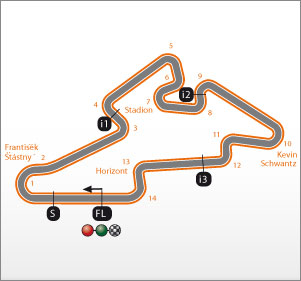
bwin Grand Prix Ceské republiky

| 26 Aug | Automotodrom Brno | Czech Republic


Circuit info
Length: 5.403 m. / 3,357 miles
Width: 15m
Left corners: 6
Right corners: 8
Longest straight: 636 m. / 0,395 miles
Constructed: 1987
Modified: 1996
Introduction:
The world’s most famous riders have taken part in GP events in Brno since 1930, where up until 1982 they would race through the villages and western parts of the city on a road track named after the first Czechoslovak President - T.G. Masaryk. A new circuit was built during the 1980s with the aim of attracting Formula 1 to Czechoslovakia, and in 1987 it played host to the FIM Czech Grand Prix. Popular with both fans and riders, the new circuit is built in a natural bowl which is banked in places to offer spectators an excellent view. Brno constantly changes in elevation as it sweeps across forested hillsides and its fast undulating corners test rider talent and engineering to the limit.

source
Reade more >>

Red Bull Indianapolis Grand Prix


Circuit info
Length: 4.216 m. / 2,620 miles
Width: 16m
Left corners: 10
Right corners: 6
Longest straight: 872 m. / 0,542 miles
Constructed: 1909
Modified: 2007
Introduction:
The first motorsport race which took place at Indy was a motorcycle one on August 14th 1909, on the 2.5 mile oval circuit, and despite its 100-year history it was not until 2008 that MotoGP arrived at the Indianapolis Motor Speedway.

To celebrate the event an intense modification of the layout was undertaken, but without affecting the legendary oval. The layout of the track, which is 4.168km in length and has 16 turns, incorporates the main straight of the famous oval circuit including the Brickyard and an area between turns 1 and 2 of the oval, before meandering through the vast interior of the IMS.

source
Reade more >>

Red Bull U.S. Grand Prix


Circuit info
Length: 3.610 m. / 2,243 miles
Width: 15m
Left corners: 7
Right corners: 4
Longest straight: 453 m. / 0,281 miles
Constructed: 1957
Modified: 1996
Introduction:
MotoGP returned to the US for the first time in 10 years for the Red Bull U.S. Grand Prix at Laguna Seca in July 2005, with a fairy-tale first GP win for American Nicky Hayden. The Californian track played host to Grand Prix events from 1988 to 1994 but advancements in MotoGP racing machines required the event to be moved elsewhere while the track was modified and adapted to meet present day safety requirements.

Since December 2004 the circuit has undergone major changes, primarily to increase track safety. The first phase of modernisation included an expanded exit lane, replacement of the kerbs and widening of the main straight, whilst more recent changes involved moving back walls to create bigger run-off areas. The circuit’s principal features, however, remain the same, with 3,58 km of track and 11 curves.

source
Reade more >>

Gran Premio d'Italia TIM


Circuit info
Length: 5.245 m. / 3,259 miles
Width: 14m
Left corners: 6
Right corners: 9
Longest straight: 1.141 m. / 0,709 miles
Constructed: 1974
Modified:
Introduction:
Located 30km north-east of Florence in the beautiful countryside of Tuscany, Mugello is a modern circuit with excellent facilities. Bought by Ferrari back in 1988, the 5.245km track has been renovated to a high standard and has a growing reputation as one of the world’s most up-to-date, scenic and safest race circuits.

A blend of slow and fast turns with sweeping curves, long straights and off-camber corners make Mugello one of the most challenging circuits for the riders and engineers. Having hosted its first MotoGP event back in 1976 the venue became a permanent fixture in 1991 after extensive refurbishment. Set within a beautiful tree lined Tuscan valley, Mugello also offers ample viewing areas for a particularly boisterous and partisan Italian crowd.

source
Reade more >>

eni Motorrad Grand Prix Deutschland


Circuit info
Length: 3.671 m. / 2,281 miles
Width: 12m
Left corners: 10
Right corners: 3
Longest straight: 700 m. / 0,435 miles
Constructed: 1996
Modified: 2003
Introduction:
Car and bike races have been held on closed public roads in the area around the town of Chemnitz, Germany since the 1920s and were still taking place until as recently as 1990. It was decided, however, that the five mile course through such a densely populated area was no longer suitable and a new circuit was built five miles west of Chemnitz in 1996. Although mainly used as a driver training centre and road transport safety station, Sachsenring first hosted MotoGP in 1998 and many improvements have taken place since then, including a drastic layout enhancement in 2001. Numerous tight corners make it one of the slower tracks on the calendar but there is never any shortage of close racing action.

source
Reade more >>

Iveco TT Assen


Circuit info
Length: 4.542 m. / 2,822 miles
Width: 14m
Left corners: 6
Right corners: 12
Longest straight: 487 m. / 0,303 miles
Constructed: 1955
Modified: 2010
Introduction:
Assen is the only venue to have held a round of the Motorcycle World Championship every year since its creation in 1949. The circuit was purpose built for the Dutch TT in 1954, with previous events having been held on public roads. The track is narrow, with rapid changes in direction, and is fully surrounded by grass banks and grandstands, providing excellent viewing for the hundreds of thousands of fanatical spectators who are drawn to the most prestigious event in Dutch motorsport every year. A huge favourite with riders, Assen is well known for its festive and extravagant atmosphere.


In 1999 the circuit was modified with a new grandstand, control tower, press centre and renovated boxes. Modifications to the Assen circuit over the winter of 2005/6 saw the length of the championship’s longest serving track cut from over 6km down to 4.555km/2.83miles.

source
Reade more >>

British Grand Prix


Circuit info
Length: 5.900 m. / 3,666 miles
Width: 17m
Left corners: 8
Right corners: 10
Longest straight: 770 m. / 0,478 miles
Constructed: 1948
Modified: 2011
Introduction:
With more than 60 years of history Silverstone has become one of the most prestigious venues dedicated to motorsport. Completely revamped in recent years, a multimillion pound investment saw the completion in 2010 of a first phase of works to greatly improve the venue, making it one of the fastest tracks on the MotoGP calendar and earning high praise from the World Championship riders who enjoyed the new layout. The ‘Silverstone Wing’, a state-of-the-art, multi-million pound new Pit and Paddock Complex, will welcome MotoGP in 2011, thus adding to already breathtaking facilities at Silverstone.

source
Reade more >>

Gran Premi Aperol de Catalunya

| 03 Jun | Circuit de Catalunya | Spain

Circuit info
Length: 4.727 m. / 2,937 miles
Width: 12m
Left corners: 5
Right corners: 8
Longest straight: 1.047 m. / 0,651 miles
Constructed: 1991
Modified: 1995
Introduction:
In 1989, through the joint collaboration of the Catalan Autonomous Government, the Montmeló Town Council and the Royal Automobile Club of Catalunya (RACC), work began on giving one of Europe’s most beautiful cities a state of the art race track to match. The Circuit de Catalunya opened on the doorstep of Barcelona in September 1991 and welcomed its first international event that same month, hosting the Spanish F1 Grand Prix. It went on to host the European Motorcycle Grand Prix and in 1995 became home to the Gran Premio de Catalunya. Considered to be one of the best designed circuits of the recent era, the Circuito de Catalunya won the much coveted IRTA ‘Best Grand Prix’ trophy for 2001 and has a general admission capacity of 104,000 spectators.

source
Reade more >>

Monster Energy Grand Prix de France


Circuit info
Length: 4.180 m. / 2,597 miles
Width: 13m
Left corners: 4
Right corners: 9
Longest straight: 674 m. / 0,419 miles
Constructed: 1966
Modified: 2008
Introduction:
Built in 1965 around the existing 24-Hour track, the Le Mans Bugatti Grand Prix race circuit lies 5km south of the city of Le Mans and 200km south-west of Paris. The venue has hosted Grand Prix since the late sixties but a serious accident to Spanish rider Alberto Puig in 1995 saw it struck off the calendar until 2000 whilst stringent safety improvements were carried out.


Le Mans is a tight track dominated by first gear corners that place the emphasis on late braking and hard acceleration, whilst rear end traction is also a key area. With the capacity to comfortably accommodate up to 100,000 spectators, the Bugatti circuit also plays host to the 24 hour truck race, the FIA GP2 Championship, French Touring Car and GT races.

source
Reade more >>

Grande Prémio de Portugal


Circuit info
Length: 4.182 m. / 2,599 miles
Width: 14m
Left corners: 4
Right corners: 9
Longest straight: 986 m. / 0,613 miles
Constructed: 1972
Modified: 2006
Introduction:
Situated on the Atlantic coast of Portugal, 28km from capital city Lisbon, the Estoril circuit was used as a MotoGP venue for the first time in 2000. Built in 1972 by Fernanda Pires da Silva the circuit was used mainly for European F2 races in the seventies and after major redevelopment in the early eighties it staged its first Formula 1 Grand Prix in 1984.

One of the trickiest tracks on the GP calendar, Estoril combines long, constant radius corners with heavy braking zones, bumpy straights and a difficult chicane which was added to the back section in 1994. Its geographical position means that weather can be unpredictable, although its generally warm, dry nature makes it a regular choice for pre-season testing sessions

source:
Reade more >>

Gran Premio bwin de España


Circuit info
Length: 4.423 m. / 2,748 miles
Width: 11m
Left corners: 5
Right corners: 8
Longest straight: 607 m. / 0,377 miles
Constructed: 1986
Modified: 2002
Introduction:
Built in 1986 and hosting its first Grand Prix one year later, the circuit of Jerez is now one of the most popular MotoGP venues and the focal point for a city fanatical about sport. Set in a slight valley in the south of Spain, Jerez is blessed with consistently good weather and beautiful scenery, its numerous grandstands providing the perfect viewing facilities for up to 250,000 spectators.


With two alternative road circuits (4,423m and 4,428m), which were resurfaced during 2005, Jerez is a popular venue used by many race teams for testing throughout the year, whilst its recently updated corporate and media facilities have proven to be a popular addition to the complex. Other facilities such as the control tower and pit boxes have also been vastly improved.

source:
Reade more >>